


1–2 minutes
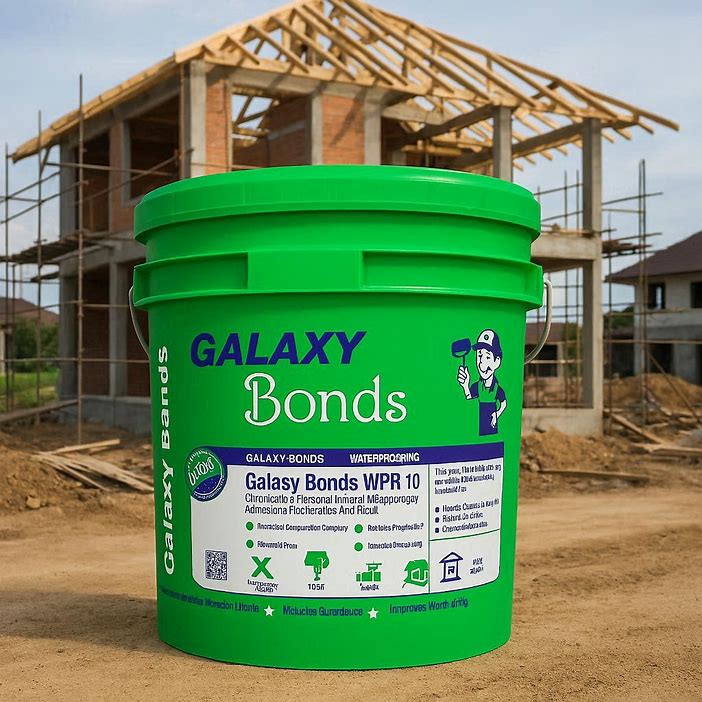
Galaxy Bonds WPR 10
Description
GalaxyBonds WPR 10 is a multipurpose liquid integral waterproofing and water-reducing admixture designed for all types of concrete and mortar.
Usage
GalaxyBonds WPR 10 is a high-efficiency chemical that increases the structural strength of concrete. It is recommended for use in:
- Basements & Piling
- Roofing & Roof Casting
- Water Tanks & Septic Tanks
- Bridges & Culverts
- Plasters & Masonry
- General construction and many other purposes
Characteristics / Advantages
- Rapid Strength Gain: Significantly accelerates the strength development of concrete.
- Crack Resistance: Effectively reduces the occurrence of shrinkage cracks.
- Integral Waterproofing: Acts as a powerful internal water repellent.
- Corrosion Protection: Delays rust in iron reinforcement rods by shielding them from salinity and moisture.
- High Performance: Acts as a superior protective coating for cementitious structures.
Application Information
- Dosage: 200–300 ml per 50 kg bag of cement. (Dosage may vary based on site requirements).
- Compatibility: Fully compatible with all types of cement and cementitious materials.
Application Instructions
- Dry Mixing: Combine cement, aggregates, and sand. Mix thoroughly in a dry state.
- Initial Hydration: Add 50–70% of the total required water and mix until the mass is moist.
- Admixture Integration: Add the GalaxyBonds WPR 10 to the remaining water and pour it into the mixing drum. Mix the entire quantity for approximately 3 minutes to achieve a homogeneous mix.
- Placement: Pour the mixture onto a tray and lay the concrete as per project requirements.
- Curing: Follow standard curing procedures such as ponding or using a dedicated curing compound.
Caution
- Wash hands thoroughly with soap and water after use.
- For information and advice on the safe handling, storage, and disposal of chemical products, users should refer to the most recent Material Safety Data Sheet (MSDS) containing physical, ecological, toxicological, and other safety-related data.
Leave a Reply